How filters work to control contamination

We have recently come across this rather thorough yet simple explanation of How Filters Work to Control Contamination. The article was written in 2001 but still makes for an interesting read today.

This would be a good time to expand on the test methods and the obvious one to cover today will be Particle Counting. We can offer both the Instrumental Particle Count and Optical Microscopy or “Patch Test” method (our preferred choice as it offers more detail of the debris present in the sample, including an image of the contaminants). An example of a few of the patches can be seen below.
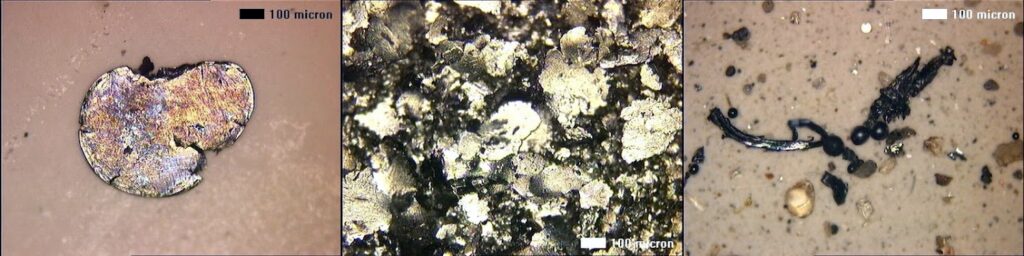
Any of these are bad news!

You may also like

  • TriboUK 2016

    TriboUK 2016

    We are proud to continue our involvement in supporting Tribology research by sponsoring the 2016 TriboUK student conference hosted this year by Leeds University.

    Continue reading March 30th 2016
  • A simple tip for oil drum storage

    A simple tip for oil drum storage

    This is so simple and clever that I can’t help but share! See the original article here and then go out and do it!

    Continue reading February 27th 2014
  • Bottle Cleanliness

    Bottle Cleanliness

    I came across this article on bottle cleanliness while catching up with the latest articles. Our standard issue bottles have repeatedly tested as satisfactory for cleanliness levels, and our ability to repeatedly generate consistently clean results on monthly samples from clean systems confirms it. The Patch Test Method used also offers another line of defence

    Continue reading May 12th 2014